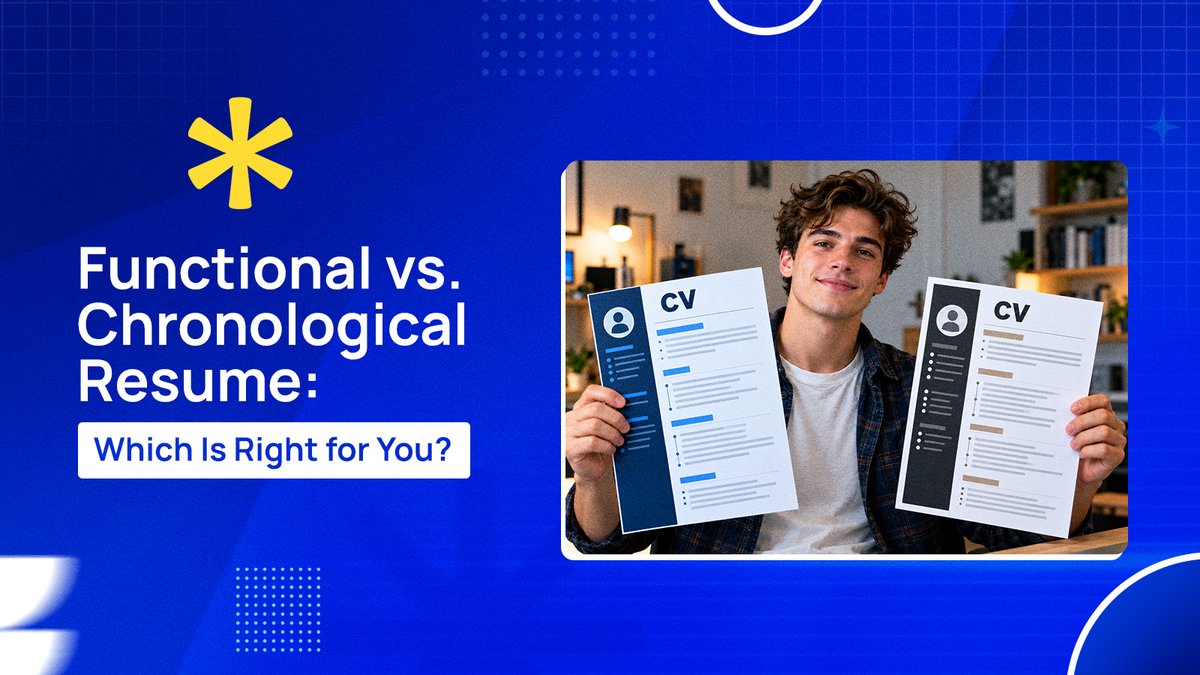
A functional resume highlights your skills and abilities, while a chronological resume emphasizes your work history, listing your most recent job first. Many job seekers struggle to decide which format will present their qualifications most effectively.
The choice that matters when your career path doesn't follow a traditional timeline. Maybe you are going into a new field, returning to work after a break, or looking to apply for your first professional role.
You need a format that highlights your strengths while helping recruiters understand what you bring to the position. So, which is the right choice?
When comparing a functional vs chronological resume, the best choice depends on your career experience, employment history, and the requirements of the job you want.
In this blog, we will explore how both formats work, their pros and cons, common formatting mistakes to avoid, and how to choose the option that presents your qualifications clearly to potential employers.
Quick Summary: Functional vs. Chronological Resume
-
A functional resume focuses on skills, qualifications, and relevant achievements rather than employment history, making it useful for career changers, recent graduates, and professionals with employment gaps.
-
A chronological resume (reverse chronological resume) lists work experience from the most recent position to the oldest, helping recruiters understand career progression, job responsibilities, and professional experience.
-
The main difference between a functional and chronological resume is how they present qualifications: functional resumes prioritize transferable skills, while chronological resumes emphasize work history and career development.
-
A functional resume can highlight relevant abilities, but recruiters may find it difficult to connect those skills to specific jobs if employment details are limited.
-
A chronological resume is generally suitable for candidates with consistent work experience and relevant job history, although employment gaps and frequent job changes become more visible.
-
A combination resume brings together both formats by highlighting relevant skills and achievements while maintaining a reverse chronological work history.
What Is a Functional Resume?
A functional resume focuses more on your skills, background, and relevant accomplishments. It organizes your qualifications into skill-based categories, allowing a potential hiring manager to immediately understand your capabilities before reviewing your work experience.
This format can be useful when your previous job titles do not reflect your current abilities or when you have developed relevant skills through different experiences.
A functional resume generally includes:
- Contact information - Your name, phone number, email address, and relevant professional profile.
- Professional summary - A brief introduction to your key skills, qualifications, and career goals.
- Skills and qualifications - Relevant abilities grouped into categories, such as project management, technical expertise, communication, or customer service.
- Relevant achievements - Examples of how you applied those skills, ideally supported by measurable results.
- Work history - A concise list of previous employers, job titles, and employment dates, usually without extensive descriptions of each role.
- Education and certifications - Degrees, training, and credentials relevant to the position.
What Is a Chronological Resume?
A chronological resume is a resume format that emphasizes your work history, listing your most recent position first and moving backward through previous roles. It helps employers understand your career progression, professional experience, and responsibilities over time.
This format is particularly useful when your previous roles and achievements relate closely to the job you want.
It allows recruiters to see where you have worked, how your responsibilities have developed, and what experience you can bring to the position.
A chronological resume typically contains the following sections:
- Contact information: Your name, phone number, email address, and relevant professional profile.
- Professional summary: A brief introduction to your experience, key qualifications, and career goals.
- Work experience: Your previous positions listed in reverse chronological order, with job titles, employers, employment dates, responsibilities, and relevant achievements.
- Skills and qualifications: Technical abilities, industry knowledge, and other skills relevant to the position.
- Education and certifications: Your degrees, professional training, and certifications that support your qualifications.
Functional vs. Chronological Resume: Which Is Right for You?
By now, you know the definition of a functional and chronological resume. It might have made you wonder: which resume format is right? The right choice between the two depends on how recruiters understand your skills, work experience, and career progression.
A functional resume groups your qualifications by skill area, while a chronological resume presents your employment history in reverse chronological order, starting with your most recent position.
However, the format alone will not make your application competitive. You still need to identify some strong skills to include on your resume for your target role. It is also important to support them with relevant achievements, responsibilities, and examples.
The following table can help you understand the difference between a chronological resume vs functional resume:
| Comparison Factor | Functional Resume | Chronological Resume |
|---|---|---|
| Main focus | Skills, abilities, and relevant achievements. | Work history and career progression. |
| Work experience | Summarised, with less emphasis on individual roles. | Listed in reverse chronological order, with responsibilities and achievements for each role. |
| Career progression | Less prominent. | Easy to follow. |
| Employment gaps | Can shift attention towards relevant skills, although gaps may still need explanation. | Makes gaps in employment timelines more visible. |
| Suitability for career changers | Can highlight transferable skills from different experiences. | Can work well when previous experience supports the target role. |
| Best suited for | Candidates whose skills are more relevant than their recent job titles or career timeline. | Candidates with relevant work experience and a clear employment history. |
| Recruiter readability | May make it harder to connect skills with specific roles if work history is too brief. | Makes employers, dates, responsibilities, and career development easier to review. |
Functional vs. Chronological Resume: Pros and Cons
After comparing the two formats, the next step is to understand how each performs in a real job application. A resume should make it easy for recruiters to spot your qualifications, follow your work history, and see whether you're a good fit for the position.
A functional resume highlights skills and achievements. The chronological resume emphasizes employment history and career progression. You need to understand that both these formats come with specific advantages and disadvantages depending on your background and career goals.
Comparing their pros and cons can help you choose the format that presents your qualifications most effectively.
Pros and Cons of a Functional Resume
A functional resume puts skills and relevant achievements at the forefront rather than making employment history the main focus. This can help you highlight your transferable abilities. It is particularly useful when the previous job titles do not align with the position you want.
However, this format may make it harder for recruiters to understand where those skills were developed.
| Factor | Advantages | Disadvantages |
|---|---|---|
| Skills presentation | Highlights transferable skills relevant to the target role. | May make it harder to connect skills to specific jobs. |
| Achievements | Emphasizes relevant accomplishments from jobs, projects, and training. | Achievements may lack context if responsibilities and roles are not explained. |
| Career changes | Helps demonstrate abilities that apply to a new industry. | May not clearly show how previous experience supports the career change. |
| Employment gaps | Shifts attention towards skills and qualifications. | Does not eliminate gaps or the need to explain employment history. |
| Career progression | Allows candidates to group relevant skills from different experiences. | Makes professional growth over time less apparent. |
Pros and Cons of a Chronological Resume
A chronological resume presents your employment history in reverse chronological order. This helps recruiters follow your career development and career changes over the course of your working career.
The resume works particularly well when your previous roles demonstrate relevant experience or increasing responsibility. However, employment gaps or frequent job changes may be more noticeable.
| Factor | Advantages | Disadvantages |
|---|---|---|
| Work history | Presents employers, job titles, and employment dates clearly. | Makes employment gaps and frequent job changes more visible. |
| Career progression | Shows how responsibilities and experience have developed over time. | May emphasize an inconsistent career path. |
| Skills presentation | Connects skills to specific roles and responsibilities. | Transferable skills may receive less attention if previous roles differ from the target job. |
| Achievements | Shows accomplishments within the context of each position. | Relevant achievements may be overlooked if job descriptions focus too heavily on routine duties. |
| Career changes | Demonstrates relevant experience when previous roles support the new career direction. | May be less effective when previous job titles do not reflect the skills required for the new role. |
Common Resume Formatting Mistakes to Avoid
Even with the right resume format, small formatting mistakes can make your qualifications harder for recruiters to review. Inconsistent headings, unclear dates, and poorly organized information can distract from your experience.
This makes it difficult for the recruiter to identify your suitability for a role. Knowing the things to add to a resume is important, but presenting that information clearly is equally essential.
Whether you choose a functional or chronological resume, avoid these common mistakes:
- Using complex layouts - Avoid excessive columns, decorative graphics, and text boxes that may interfere with how applicant tracking systems (ATS) parse your resume.
- Choosing unclear section headings - Use familiar headings such as Work Experience, Skills, Education, and Certifications so recruiters can locate important details quickly.
- Inconsistent date formatting - Present employment dates consistently across all positions to make your career timeline easy to follow.
- Adding irrelevant information - Prioritize skills, achievements, qualifications, and experience that relate to the position rather than including details that do not strengthen your application.
- Listing skills without evidence - Support relevant abilities with examples of projects, responsibilities, or measurable achievements where possible.
- Overloading the resume with keywords - Include relevant terms from the job description naturally, and avoid repeating keywords without demonstrating the skills behind them.
- Ignoring proofreading - Check for spelling errors, grammatical mistakes, inconsistent spacing, and formatting issues before submitting your application.
How to Choose the Right Resume Format?
Your career history should determine how you organize your resume. Think about what an employer needs to understand first: your professional growth, your transferable abilities, or a combination of both.
The answers will help you choose a format that reflects your circumstances without obscuring important details.
1. Consider Your Work History
Your employment history can help determine which format presents your experience most clearly. Think about how closely your previous roles relate to the position you want.
- Choose a chronological resume if your previous jobs demonstrate relevant experience or increasing responsibility.
- Consider a functional resume if your skills are more relevant than your previous job titles.
- Include accurate job titles, employers, and employment dates, whichever format you use.
2. Identify the Skills Most Relevant to the Role
Recruiters want to see how your abilities match the job requirements. Your resume should make those skills easy to identify and support them with evidence.
- Review the job description for essential skills, tools, and qualifications.
- Highlight relevant technical and transferable skills.
- Support important skills with examples from work, projects, training, or volunteering.
- Avoid listing abilities you cannot demonstrate or explain.
3. Account for Career Changes or Employment Gaps
A career change, a period away from work, or limited professional experience can affect how you present your qualifications. Your resume should highlight your strengths without making your background difficult to understand.
- Consider a functional format if you need to emphasize transferable skills from different experiences.
- Use a chronological format if your previous work provides useful evidence for the new role.
- Explain relevant projects, training, or freelance experience where appropriate.
- Keep your employment history accurate rather than concealing gaps or changing dates.
4. Check the Employer's Expectations
Some employers or recruiters may prefer specific submission requirements. A clear, conventional layout is generally a practical choice for most applications.
- Follow the employer's instructions for file type and submission.
- Use standard section headings and a readable layout.
- Keep essential information in the main document text rather than relying on graphics.
- Review the final resume to ensure the content is easy to scan and the formatting displays correctly.
5. Consider a Combination Resume
A functional or chronological format may not meet every candidate's needs. The combination of both in a resume brings skills and achievements to the forefront while retaining a detailed work history in reverse chronological order.
- Use a combination format when both your relevant skills and employment experience deserve attention.
- Group related skills near the top of the resume.
- Include job titles, employers, dates, responsibilities, and achievements.
- Keep the document concise and make sure each section supports your suitability for the role.
Chronological vs Functional Resume: Making the Right Choice for Your Career
Choosing between a functional vs chronological resume depends on your work history, career goals, and the experience you want to highlight. A functional format emphasizes skills, while a chronological format showcases career progression.
The best choice is the one that presents your qualifications clearly and supports your application for the target role.
At Tech Disciples LLC, we help technology professionals present their experience and capabilities effectively to potential employers. Whether you need to refine your existing resume or prepare an Applicant Tracking System resume, our resources can help you structure your information clearly.
Aligning your resume with your professional background and target role can also help you identify relevant job openings and apply to companies that value your skills.
Explore our resume resources and connect with Tech Disciples LLC to take the next step in your job search.
Frequently Asked Questions
1. Is a functional resume better than a chronological resume?
No, a functional resume is not always better than a chronological resume. The better option depends on your career history and the experience you want to highlight. In a functional resume, your accomplishments and skills are put as the priority, whereas a chronological resume makes it easier to see your employment history and career progression.
2. Is a chronological resume better for applicants with work experience?
Yes, a chronological resume is often a strong choice for applicants with relevant work experience. It shows past roles, prior responsibilities, the length of employment, and career development to recruiters.
3. Can I use a functional resume if I have employment gaps?
Yes, you can use a functional resume if you have employment gaps. This format gives greater prominence to your skills and achievements rather than your employment timeline. However, it is still important to provide accurate work history because recruiters may want to understand when and where you gained your experience.
4. Which resume format is better for career changers?
A functional or combination resume can be especially suited for career-change candidates, based on their experience. This format showcases portable skills, whereas a combination format ties those skills to relevant work experience and achievements. The latter can be useful when you want to demonstrate both your abilities and professional background.
5. Do employers and recruiters prefer chronological resumes?
Many employers and recruiters prefer chronological resumes because the job titles, employers, dates, and career progressions are easy to read. However, preferences vary by employer and role. A functional or combination resume may also be appropriate when it communicates your relevant qualifications clearly.
6. Can I combine functional and chronological resume formats?
Yes, you can mix and match functional and chronological resume formats by using a combination resume. This format helps push related skills and accomplishments to the top while applying reverse-chronological work history.