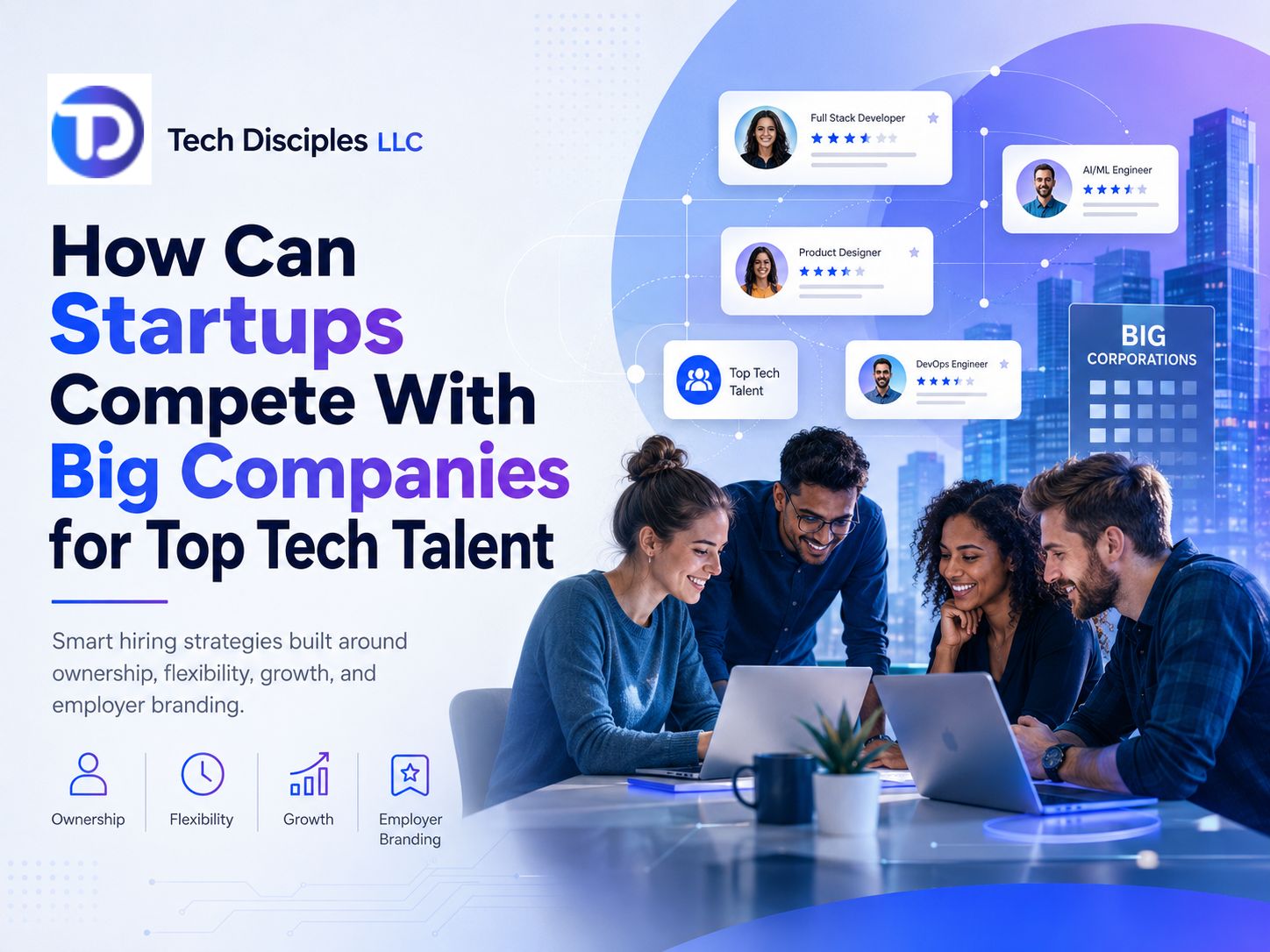
Hiring the best technical employees may seem out of reach to many startups at present. For large tech firms, it is very easy to attract the best talent through salary, status, benefits, and stability. Startups, on the other hand, have small recruiting teams and small budgets. Competing with Big Tech for AI engineers, software developers, and technical leaders has become increasingly difficult for start-ups.
Compensation alone is no longer a sufficient career motivator for top engineering candidates.
Today’s top engineering candidates increasingly prioritize more than compensation alone. They demand greater technical ownership and independence, as well as rapid promotion opportunities. The desire for flexible work is also becoming paramount, accompanied by a greater emphasis on meaningful work. They want to build products that create meaningful impact, rather than to be another tiny component of a large corporation.
Startups that rethink their hiring strategy now have a real opportunity to compete more effectively for top technical talent. In this blog post, we'll dive into a strategy that will help you compete against Big Tech and its unfair hiring advantages.
The strategy relies on savvy recruiting, outstanding employer branding, and exceptional candidate experiences. The right combination of equity, employer branding, and retention strategy can help startups attract and retain stronger technical talent.
What Hiring Disadvantages Do Startups Need To Fix First?
Most startups lose good candidates before interviews even begin.
The main problems usually are:
- Lack of clarity in job descriptions.
- Weak employer branding.
- A long and slow hiring process.
- Poor communication.
- Unrealistically difficult technical interviews.
To hire the best engineers, you need to make four key areas visible. These engineers will care about your product vision and the technical problems they will be solving. They will also pay close attention to their career prospects and the credibility of your leadership. A poorly executed recruitment process will translate to a poorly run company for the candidate.
Similarly, many startups underestimate how fast good engineering candidates move. Senior backend developers, DevOps engineers, and AI experts are often asked to interview several times within a matter of days.
When interviews take multiple weeks or communication becomes infrequent, candidates typically disengage well before an offer is extended. Companies that condense interviews into a systematic and rapid process tend to improve both their offer acceptance rate and the caliber of candidates.
Start-ups should also avoid copying long, FAANG-style interview processes that frustrate experienced candidates. Most experienced engineers prefer practical discussions around system design, scalability, and product engineering challenges. The engineers care a lot about the actual execution. At the end of the day, the engineers would rather discuss this meaningful problem than test algorithms for 5 hours.
Before scaling up an engineering team, a firm must create a hiring process that is fast, clear, and technically robust.
What Can Startups Offer That Big Companies Cannot Easily Match?
Startups generally don't win by offering top-dollar compensation packages. Instead, they compete by offering experiences that large corporations can't match.
How Can Ownership, Autonomy, And Direct Product Impact Attract Top Engineers?
The impact of work and ownership is one of the largest benefits of startups. As a corporate engineer, you usually own only a small piece of a larger system. However, startups offer a qualitatively different level of ownership. There, you have a unique chance to influence architecture, own the product, and define the technical strategy. A large percentage of engineers who leave a corporation are motivated by one of these factors.
Engineers want to have:
• Control
• Speed
• Minimal bureaucracy
• Technical ownership
Many experienced developers prefer work that creates a visible business impact. Employees are willing to give up top-end salaries when ownership and decision-making authority are offered.
How Can Rapid Career Growth And Cross-Functional Learning Beat Corporate Specialization?
Rapid career growth is one of the strongest advantages start-ups can offer technical candidates. Large companies often place engineers into narrowly defined roles. Startups, by contrast, accelerate career growth by exposing developers to complex technical challenges early. You're responsible for infrastructure and product design, and the scaling problems from day one. Engineers get exposed to AI engineering and leadership roles more quickly, too.
Through these experiences, engineers can gain a broader range of technical and business skills. Ambitious engineers are often drawn to startups by the stronger career trajectories they offer.
How Can Mission-Driven Culture And Flexibility Become Stronger Than Prestige?
Prestige is still important, but engineers today value mission-oriented culture and flexibility equally.
Currently, developers are more concerned with technical challenges, asynchronous communication, and work-life balance. Startups are often better positioned to meet these expectations quickly. Compared with large enterprises, Startups usually adapt more quickly to changing developer expectations and workplace preferences.
Startups' mission also tends to build strong emotional bonds. Engineers want to see their contributions to innovation and make a long-term impact.
For many candidates, mission and flexibility have taken precedence over prestige.
How Can Startups Build A Competitive Offer Without Matching Big Tech Salaries?
The majority of startups cannot compete with the remuneration packages offered by large corporations. Startups need to offer alternatives through a tech salary guide. Ownership is likely to be important, as is long-term development potential and freedom.
How Should Startups Explain Equity, Stock Options, Vesting, And Upside Clearly?
Plenty of startups lose good candidates because they do a poor job of articulating significant equity. Senior engineers need clarity about:
- Stock options
- Structure of vesting
- Risk of dilution
- Strike prices
- Future of the company
- Long-term upside potential
Empty promises of future wealth only erode your trust rapidly. Open and honest discussions about risks and rewards will improve your recruitment. Candidates also appreciate knowing how the equity relates to impact and internal ownership.
What Creative Benefits Can Help Close The Compensation Gap?
Startups could improve their work experience to attract tech talent. Current trending perks are:
- Remote-first
- Flexible work hours
- Learning stipend
- AI tools budget
- Conferences
- Home office set-up
- Four-day work week
Engineers seek significant engineering work, the latest technologies, and quick career progression. Good career development opportunities can offset the lower cash compensation.
When Should Startups Use Full-Time, Contract, Fractional, Or Temp-To-Perm Tech Talent?
It makes sense for startups to be flexible about hiring:
Long-term engineering activities that require sustained ownership will require full-time engineers. However, the company might find contractor labor to be useful for:
• Short-term projects
• Implementation of AI
• Migrations
• Specialized infrastructure-related tasks.
Fractional technical leaders provide startups with senior technical expertise at a lower cost than executive-level talent. Working with temp-to-perm staff provides hiring assurance along with a flexible labor force.
How Can Startups Design A Hiring Process That Beats Corporate Recruiting?
Hiring experience should feel efficient, transparent, and human for a startup.
How Can Founder-Led Outreach, Warm Introductions, And Employer Branding Reach Passive Candidates?
You are not going to find the top technical talent you are looking for on any job boards. It comes through referrals, tech communities, industry networks, and direct recruitment.
Startups have founder-led recruiting as one of their biggest competitive advantages. Talented candidates are anxious to hear the product vision and the company's plans directly from the founder.
Good employer branding also enhances the recruiting success in tech. Technical content and community presence are critical for your employer brand. Engineering blogs and open-source contributions demonstrate team expertise and establish credibility. In-depth case studies and ongoing community engagement build credibility in your industry.
The interview process needs to be pragmatic and time-efficient. The typical profile of a good candidate desires something like the following:
• Introduction conversation
• Technical conversation
• Problem-solving exercise with a real-world problem
• Founder interview
• Rapid decision
These two aspects, speed and transparency, present a significant competitive edge.
How Can Startups Retain Top Tech Talent After Winning The Offer?
Retention is as important as recruiting. Engineers stay at startups that offer:
• Honest leadership
• Reasonable working hours
• Mentorship
• Growth possibilities
• A good engineering culture
Burning out and messy management destroy retention fast. Developers stay longer in environments where they feel trusted, supported, and empowered to take ownership. Engineers want growth, business knowledge, and the power and insights that come with leadership. They desire greater control and ongoing development.
It is essential to retain the best engineers by fostering teamwork, respect, and candor. Essentially, this means that companies need sustainable processes in place and can't operate in a constant state of crisis.
The most successful companies in retaining top engineering talent are very clear in their approach. They explicitly throw away unnecessary bureaucracy. By stripping away much of the unnecessary bureaucracy, they allow their engineers to develop and progress.
Tech Disciples LLC — Connecting Great Companies with Exceptional Tech Talent
Startups can absolutely compete with Big Tech for talent, but they need a smarter hiring strategy built around ownership, flexibility, growth, and meaningful work. Winning companies understand how to attract amazing engineers. It is based on strong technical ownership and significant equity. They give engineers latitude, room for growth, and an engineering culture.
Developers today are motivated by more than a paycheck. They crave impact, control, and the ability to build something worthwhile.
Begin by creating an intelligent, data-backed startup hiring plan. Design your entire hiring workflow with effective communication and a great candidate experience. Ultimately, connect candidates with a path for long-term career growth.
Hiring and retaining elite engineering talent has become one of the biggest growth challenges for modern startups. If your company wants to attract and retain stronger engineering talent in a highly competitive market, Tech Disciples LLC can help you build modern recruiting strategies designed for today’s tech workforce.
Startups compete with Big Tech for talent: FAQs
What Red Flags Make Senior Engineers Reject A Startup Offer?
Why are senior engineers passing up startup opportunities? Bad vision, poor communication, unrealistic expectations, an immature engineering lead, and hazy compensation. Slow, unprofessional hiring process erodes trust. Senior engineers judge startups by their stability, leadership, culture, and growth potential.
Should Startups Disclose Funding Stage And Runway During Interviews?
Yes. Smart candidates expect to be asked about money, runway, hires, and business plans. Straightforward discussions allow candid risk assessments and foster trust. Not being upfront about stability turns away promising engineers who want the safety of a growing business.
What Should Startups Include In A Tech Job Description To Attract Stronger Candidates?
This makes for an amazing job description – explaining clearly the mission, the tech stack, the problems, the team, and where the job could grow. Candidates also want a view of the salary and an indication of any flexibility in the work or the level of technical ownership expected from them. More straightforward and realistic job descriptions will also attract better candidates.
Is It Better For Early-Stage Startups To Hire Generalists Or Specialists First?
Technical generalists tend to be a more sensible first hire for early-stage startups. During periods of rapid growth, generalists become extremely valuable. They are quick, can recognize many types of business problems, and can easily wear multiple hats. Niche experts in AI infrastructure, cybersecurity, DevOps, platform engineering, and system tuning turn up far later.
How Can Startups Compete For AI And Machine Learning Talent Specifically?
Startups attract AI and machine learning talent by offering faster experimentation, stronger technical ownership, and opportunities to work on meaningful problems without excessive corporate bureaucracy. Many AI engineers also value access to modern tooling, faster experimentation cycles, and direct influence over product development. They prefer startups because they can experiment faster, directly influence product direction, and work without excessive corporate bureaucracy.
Can Open-Source Work Help Startups Attract Technical Talent?
Yes. Engineering open source will only benefit your employer's branding and technical authority. To gain developers' respect and trust, startups need to engage and share their expertise. The right engineers will seek you out. Publish your engineering blog posts and release your developer tools as open source. Donations and contributions to open source will even more benefit your recruitment efforts.
How Should Startups Respond When A Candidate Receives A Big Tech Counteroffer?
Companies shouldn't engage in emotional salary wars. Instead, startups should focus on long-term advantages like technical ownership, career growth, meaningful equity, and direct product impact. Candidates who choose startups often value technical leadership opportunities, autonomy, meaningful equity, and faster career progression. Additionally, the desire for impact is very important. Candidates are attracted to startups not just for competitive offers and job security, but also for the learning potential.
How Can Startups Evaluate Culture Fit Without Creating Hiring Bias?
Team communication, collaboration, accountability, and flexibility. That should be the focus when you're hiring, not personality similarity. Structured interviews, using the same standards for everyone hired, reduce bias as much as possible. Look for people who would be a good fit for the existing team but also bring new experiences and approaches to problems.
What Should Startups Do In The First 30 Days After Hiring A Tech Employee?
The first month should cover: Onboarding, product knowledge, and tech docs. It is also a great time to build rapport and pick up short-term wins. This ramp-up will quickly expose them to their basic expectations, immediate priorities, and day-to-day activities. Good onboarding will make new engineers more confident and productive.